AnalysisCulture & heritage
When a chatbot invents an archive reference
A chatbot can send a visitor to an archive with a reference number it has invented. In Antwerp, a box of 169 slides shows how a real reference is built and how to check it.
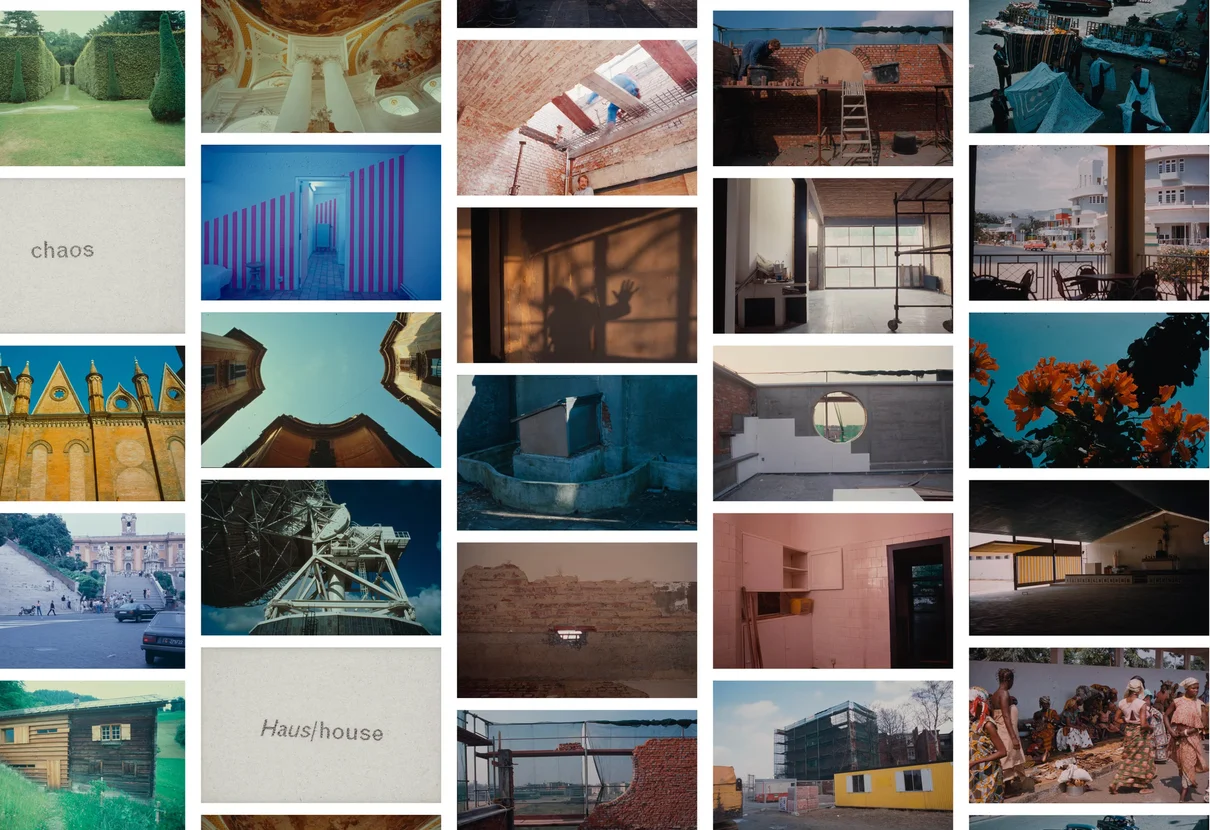
Heritage institutions are receiving enquiries in which the visitor already cites a reference number. That should save the archivist some searching, you might think. Sometimes a chatbot has invented the number, says Mirjam Verloop, project lead of a study of chatbots and heritage websites, in an interview1 published by the Dutch Digital Heritage Network on 9 November 2026.
The Drents Archief, the archive of the Dutch province of Drenthe, has described how much work a request for a document that does not exist can cost. “People state very firmly: ‘this must be there’, and then it isn’t. Or it is in our repository under completely different reference numbers,” Ellen van der Velds of the archive told the regional broadcaster RTV Drenthe2 on 24 September 2026. A volunteer, Koos Fokkens, leafed through court reports looking for a historical murder case in Zweeloo. After four weeks it turned out that the report on which the story of that case was based did not exist in the archive. Van der Velds says she knows from other archives that about 10 per cent of enquiries are written with AI, or that AI was at least used in the research. She does not say how often a number is invented, and nor does Verloop.
Take a reference that does lead somewhere: BE/653717/0087-LJ/0487. Look it up in the Archiefhub, the catalogue of the Flanders Architecture Institute3 (VAi), and you find a box of slides that a Belgian architecture student in his early twenties took shortly before Congo’s independence.
In Antwerp, the exhibition Ways of Seeing shows how architects, writers and software look at the same photographs. In the Netherlands, the Dutch Digital Heritage Network and the WO2NET foundation are studying whether chatbots change how people search online, and how heritage institutions can respond.
What box 0487 contains
The box belongs to the slide series in Lou Jansen’s archive4. Jansen (1935–2019) was part of the Turnhout School, a group of post-war modernists, and made study trips to Congo, America and Japan as a student, the VAi writes in the press release for the exhibition5. Of the 4,193 slides in that series, 169 are in the box from his trip through Congo in 1958 and 19593. At the top of the web page is another number: 161 images. So there are eight fewer slides online than the record says are in the box.
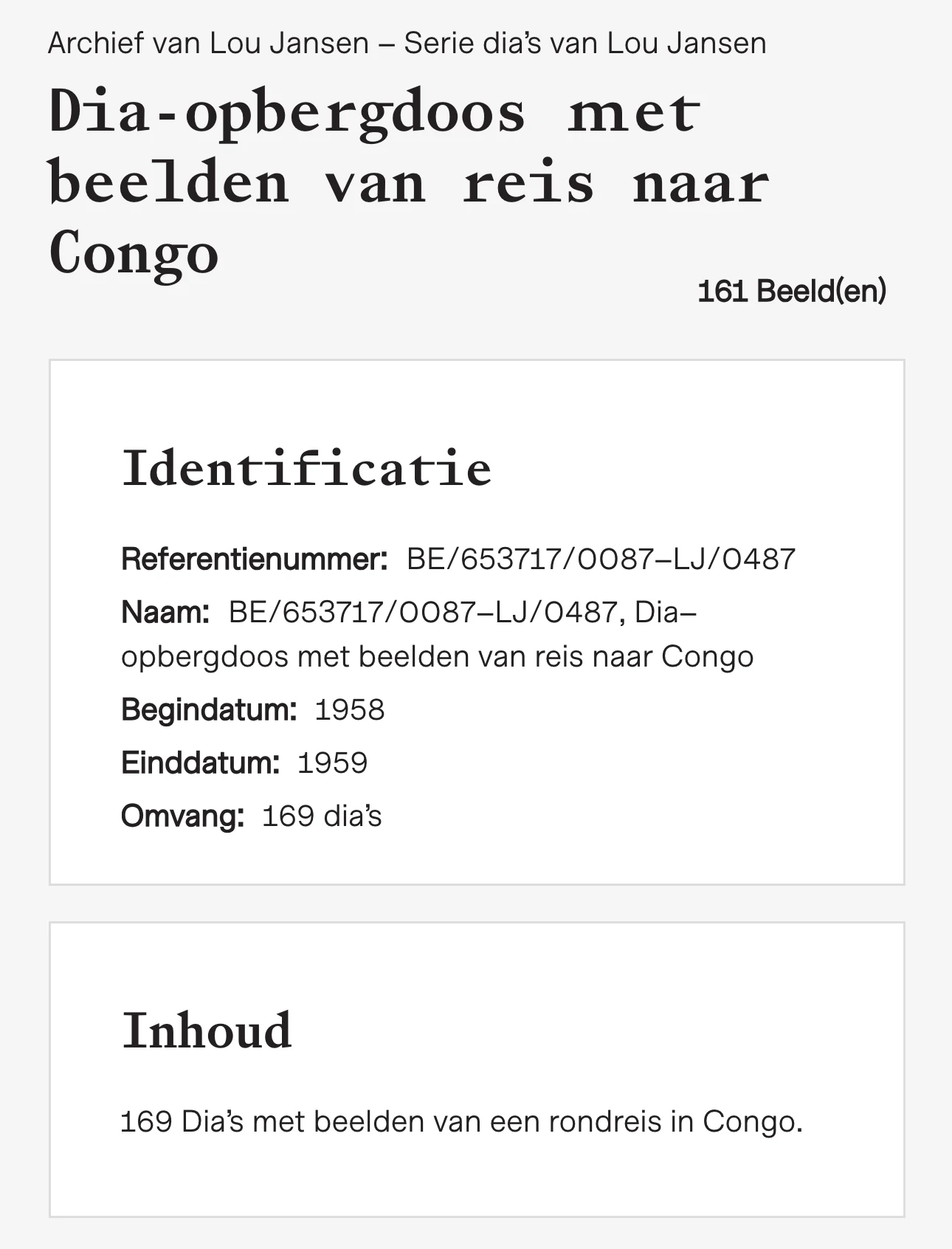
In their file names the 161 images are numbered in fourteen groups, most of them from 1 to 12. Within those groups, seven sequence numbers are missing. The page does not say whether those are seven of the eight slides, or why they are absent. The VAi’s project plan was to digitise each slide individually and to check the quality of the digital images. The project page6 does not say which images go online.
One of the slides7 shows a tall, pale building on a low base. Its façade is a grid of deep openings. A man walks past on the right. The catalogue does not say where the building stands: the slides have no captions of their own.
Under “Meer info” (more information), the record says who described this box: Frits Vandenweghe, on 13 August 2021. One level up, the catalogue also lists the boxes from Jansen’s trips to Japan, Denmark and California. Through those levels, each slide can be traced to the archive it comes from and to the other pictures it was kept with.
Those levels are written into the reference itself. BE/653717/0087-LJ is Lou Jansen’s archive8. The references of other archives in the same catalogue, such as Christian Kieckens’s, also begin with BE/653717. Within Jansen’s archive the slide series has the number 0483, and the boxes and slide trays run from 0484 to 0513. One number is missing from the list of that series4: 0488. Anyone who cites BE/653717/0087-LJ/0488 gives a reference that follows the fixed pattern and yet, in this list, belongs to no box.
How a façade acquires a keyword
Jansen’s slides are part of Ways of Seeing5, at De Singel in Antwerp until 31 January 2027. In 2021 the VAi started the project Van de lichtbak af6, in which about 35,000 slides from several architecture archives were digitised. Image-recognition software helped to describe them. It assigns keywords such as “door”, “window” or “building”. That makes large collections of photographs easier to search, the VAi says.
The slide of the tall building was given eight Dutch keywords, which translate as tree, façade, urban planning, building, city, person, residential area and plants. In the Congo box, “gevel” (façade) is attached to 14 of the 161 images and “boom” (tree) to 94. The VAi says in its note on the keywords9 that it offers them “as they are produced by the AI, without quality control”.
The same press release5 includes a photograph from Christian Kieckens’s archive. A red box runs around a dark support beneath the feet of a statue. One word is attached: “Tafel”, table. The label does not say that the support carries a statue.
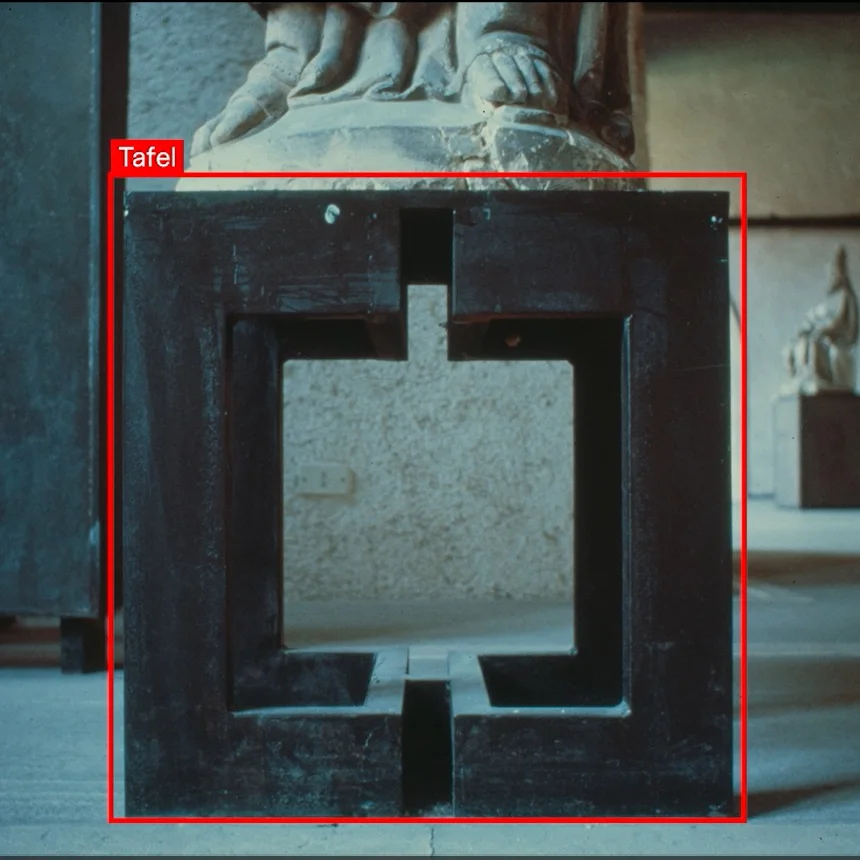
The exhibition is an installation of three photo booths, one for each archive. In each booth you look at the photographs in three ways: through the eyes of the architect, through a fictional story by Zindzi Tillot Owusu, Julie Somers or Anke Verschueren, and through the analysis of AI. For the last there are two screens. The left one shows the boxes and how confident the software is in its labels. The right one shows the instruction given to a chatbot and the answer that followed. “A photograph looks like an objective document. But it tells a different story each time, depending on who is looking,” says Tine Poot, design adviser at the VAi, in the press release.
One of the slides from Congo10 shows a woman standing on a sandy track with a bottle on her head. At the bottom right is a yellow sign: “Village Makwangi”. The keywords translate as tree, footwear, people in nature, winter, grass, landscape, person and plants. The place name on the sign is not among them. None of the keywords says who was photographing whom, shortly before independence. AI “does not recognise such historical power relations by itself”, the VAi writes in its press release.
New York or Philadelphia?
Even a correct place name can put a visitor on the wrong track. The Europeana Foundation gives an example in its method for assessing automatically added data11, from February 2024 (page 17). It does not concern a chatbot but software that recognises place names in descriptions and links them, in the Jewish History Tours project.
One photograph is titled “Solomon Mikhoels and Evgenii Kiselev, USSR Consul General in New York, Philadelphia, 1943”. The software linked it to the Consulate-General of Russia in New York City. The photograph was taken in Philadelphia. With another example from the same list, a receipt for a train ticket from Moscow, Europeana describes where such a link falls short: on a map of Moscow the ticket is less at home than a photograph of a train in a Moscow station.
The method requires a sample of the added data to be checked against requirements agreed in advance with Europeana. If the sample falls below the threshold, the data are rejected or sent back. On the question of which elements in an image are relevant, the document says, assessors find it hard to agree: what is relevant depends on who is looking.
The visitor who already has an answer
The Dutch Digital Heritage Network and the WO2NET foundation are asking heritage institutions what they notice from visitors who put their questions to a chatbot rather than a search engine. WO2NET runs Oorlogsbronnen.nl and, according to Verloop, wants to know how chatbots affect the behaviour of that platform’s users. The foundation also wants to help the institutions that preserve the memory of the Second World War keep reaching their audiences if search behaviour changes.
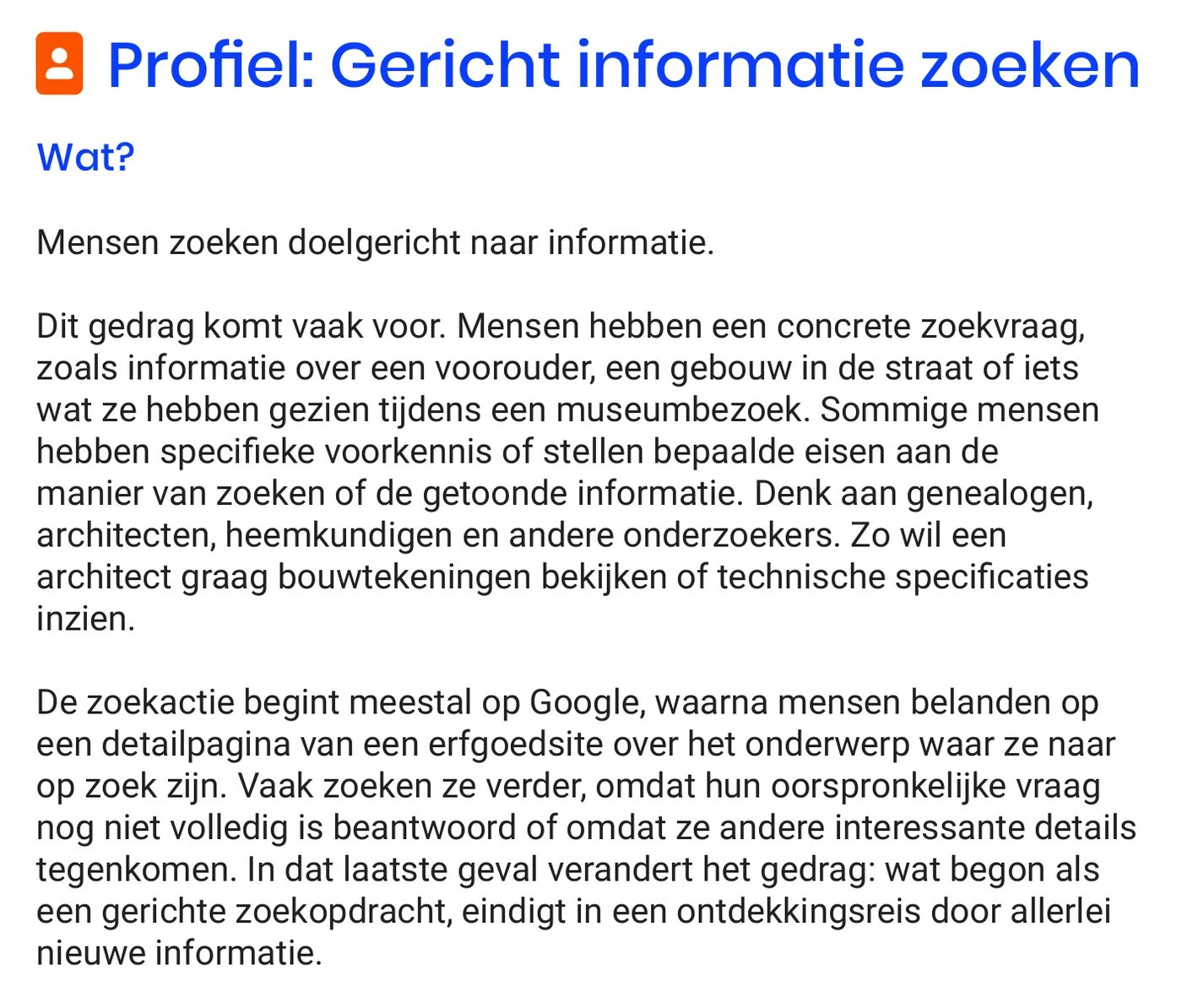
In the guide to eight ways people use digital heritage12, updated in 2025, searching with chatbots had not yet been examined, Verloop says in the interview1. According to the guide, a targeted search usually starts on Google, after which people land on a detail page of a heritage site. Verloop expects that route to change: people already get their answer in the chatbot and click through less often.
Almost all the experts Verloop spoke to consider structured data, such as linked data and terms from the Termennetwerk, the Dutch Digital Heritage Network’s network of terminology sources, even more important now. “The better information is described and linked, the greater the chance that a chatbot finds and interprets it properly and refers to the right source,” Verloop says in the interview. According to Verloop, bots are visiting heritage institutions’ websites more and more often to collect information. Then what is on the VAi’s pages, from the record for box 0487 to the keyword “winter” on the slide from Makwangi, can end up in a chatbot’s answer too.
Those visits sometimes overload websites, Verloop says. Users of the Omeka S collections platform, who met in Maastricht in September 2026, also reported more bot traffic and a heavier load on their servers. A working group formed there is drawing up guidelines for the use of AI in metadata and software development13 and will also give advice on bot traffic.
For Verloop, a fall in visits is so far only a suspicion. The survey for heritage institutions14 closes on 4 December 2026. Alongside website traffic, the researchers are asking about the questions put to staff and about visits in person. Findings are expected in the first half of 2027.
What do you do with a reference from a chatbot?
Look it up in the institution’s own catalogue. In the VAi’s catalogue that takes a single search. The full reference BE/653717/0087-LJ/0487 returns one result. For 0488 the site replies, in Dutch, that no results were found for the search. If the reference exists, go up a level and check that the archive and the series match what the chatbot claimed. Each record also has a permanent link, which can be included in an enquiry to the archive.
The International Committee of the Red Cross warned on 3 December 202515 that chatbots can invent catalogue numbers and cannot indicate that no information exists. It directs researchers to its own online catalogue. A reference that cannot be found does not mean, the ICRC says, that it is withholding information. The Drents Archief2 gave this advice in September 2026: “Keep thinking for yourself and carefully check the sources AI gives you.”
Neither the catalogue nor the VAi’s project page says where Lou Jansen’s other eight slides are. The question can at least be put precisely: 169 slides according to the record, 161 images online, seven sequence numbers missing from the file names. The member of staff who receives it will not first have to search for a document that does not exist.